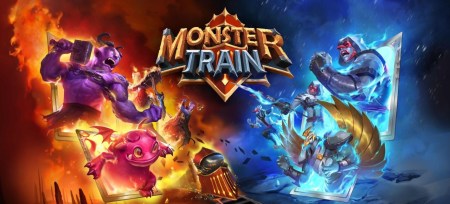
Vor Kurzem ist Monster Train aus dem Hause Shiny Shoe sehr erfolgreich auf Steam gestartet. Der Roguelike-Deckbuilder hat bereits über 3000 Bewertungen (im Schnitt “überwältigend positiv”) eingeheimst und wurde auch von vielen Streamern und YouTubern (u.a. Northernlion und Rhapsody) begeistert in ihren Content-Zyklus aufgenommen.
Das große Vorbild ist dabei eindeutig der moderne Klassiker und Genre-Mitbegründer Slay the Spire. Doch profitiert der Monsterzug nun lediglich vom Hype und “Cult of the New” oder lassen sich tatsächlich Verbesserungen im Game-Design ausmachen?
Ich hatte die Ehre, im aktuell wohl besten Game-Design-Podcast zu gastieren!
In der neuen Episode von Keith Burguns Clockwork Game Design Podcast sprechen wir über Game-Design-Theorie, Crimson Company (sowie die aktuell laufenden Kickstarter-Kampagne), die Unterschiede zwischen Brett- und Videospielen sowie diverse andere Game-Design- und Industrie-Themen.
“On today’s show, we have an interview with designer and theorist Fabian Fischer. Fabian is the designer behind Crimson Company, which is now running its fourth Kickstarter, which is currently doing incredibly well—at the time of this writing, it has over $33,000 pledged (and they were only asking or $11,000)! On the show, we discuss the difference between designing for digital vs physical, what game design theory needs to go forward, some thoughts about pre-game decisions, and a bunch more. Fabian (who folks over at our Discord may know as Nachtfischer) writes articles on game design theory, which you should absolutely check out, like this article on Insta-Tournaments, or this article on pre-game decisions (which we also talk about on the show). He also compiles a bunch of game design theory together into a “game design news” series he does called Ludomedia. He also does really cool smaller digital games which you should definitely check out here on his itch.io page. As you can see, this guy does not mess around! I am glad we got him on the show, and I think the conversation went really well, as expected.
Hinweis in eigener Sache: Am 12.05.2020 kehrt Crimson Company erneut zurück auf Kickstarter (jetzt vormerken). Diesmal nicht nur mit einer neuen Expansion (“Ragnarok”), sondern auch einer Collector’s Box und einem ersten Blick auf die kommende mobile App!
“Generally, the choice is between more polish, more ambitious game design, or shorter development time, and how much of each you can choose depends on your experience level and your available resources. […] One of the biggest strengths of indie devs is our freedom, which allows us to work in our own way, to make decisions swiftly, and to make bold choices that AAA studios might not be able to. It’s the lone wolf approach versus the large army approach. Unfortunately, it also means that we can be free to spin our wheels with very little accountability.“
“I expect boosters to become more this decade and coming console generation. I think it’ll be the new popular way of capitalizing on the concept of monetized grind, especially with the growing popularity of battle passes and the sense of slow teasing progression they ferment.”
“Structure exists in the rules of the game when they have high interconnectivity or high ‘coupling’. […] Because these rules are a holistic part of the game […] they have a multiplying effect on the system’s potential depth. Componential rules, or low-structure systemic rules […], have something more like an additive effect, by contrast.”
“So getting through […] any combat encounter […] means finding answers to four key questions. You might want to think of these as priority, preference, preservation and position – or the four Ps. All four Ps must be considered simultaneously and constantly re-evaluated as new information arises, like running out of ammo or seeing new enemies spawn in.”
“‘Never give up’ is really bad advice, especially for newcomers. We’re very quick to romanticize dedication, and we’re quick to look at folks who already released successful games and say ‘Look at them! They didn’t give up!’ […] There are ideas out there that give you something back when you work on them, but you need to explore to find them. You can’t explore if you never give up on the first path you picked.”
Ein weiteres Nebenprojekt meinerseits gibt es ab sofort auf itch.io zum Download! Spacewalk Empire verbindet Elemente aus Echtzeit- und Rundenstrategie. Es kommt auf zügiges Entscheiden und gutes Timing an, ohne dass sich das Gameplay in allzu viel Mikromanagement verliert.
Features:
Unique mix of turn-based & real-time strategy! Think on your feet and time your moves, but don’t fiddle with unit micro-management.
Random generation! Face a new level layout each match. Enemies spawn in random locations. You’ll never face the same challenge twice.
Single-player ladder! The level of challenge will adjust to how well you’re doing. What rank can you reach?
Exploding barrels! Because every good video game needs them. Also, screen shake.
“An action funnel is any system in a game that takes a wide menu of possible player actions and limits it to a subset of currently possible actions. […] So help your players navigate a complicated and interesting game space without heavy proofreading, action parsing and calculation. Use Action Funnels!”
“Skill Compensation is the degree to which a player’s performance is reflected in the final outcome of a match. […] Varying Skill Compensation can have both positive and negative effects on your game design, depending on what other properties you’re optimizing for (evaluation, learning rate, playfulness, etc).”
“1. Overpowered is much worse than underpowered […] 2. Variety always adds imbalance” […] 3. Competitive players often dislike randomness and luck […] 4. Balance automatically becomes worse over time […] 5. ‘Perfect’ balance is impossible”
“Environmental storytelling requires a certain level of deductive reasoning as we connect up details to create an overall story. We use investigative and archeological skills to determine relationships, cause and effect, and history. This makes us an active participant in the storytelling process and not just a passive viewer.”
“A playful strategy game is deep: there is a huge range of possible tactics and strategies. […] A playful strategy game is expressive: each player plays the game a little bit differently […] A playful strategy game feels low-stress. You don’t have a feeling that if you make one mistake, you’re screwed. […] A playful strategy game has a balanced difficulty. […] You have to play seriously, but not so hard that you don’t have room for experimentation or so hard that the experience becomes stressful.”
Ich halte Minion Masters für ein fantastisches Spiel. Aber nach ein paar Monaten oder teils auch nur Wochen wieder ins Spiel zurückzukehren, stellt für mich eine beträchtliche Herausforderung dar. Nicht etwa, weil ich vergessen hätte, wie das Spiel funktioniert, sondern weil es mich vom Spielen abhält.
“So I’m not talking about simplicity/complexity, and I’m not talking about depth. […] Instead playfulness refers to a property of games that encourages players to play with their gut/creatively, and minimizes the incentives to calculate/count/solve.”
“I noted that [players] are in principle unpredictable, but they are not the same thing as noise. In some contexts it is possible to improve ones ability to predict other players. […] Players are, at the very least, weighted noise generators, and in some contexts they are noisy pattern generators.”
“Modularity in game design can be used to improve the depth of a game by introducing complexity. This is done primarily by breaking up an object into many components and having them all do something. […] Systems become more fundamental to the overall structure of the object the deeper they are.”
“Randomness can be an incredibly important part of games. It’s used for variety, balance, rewards, the information horizon, and probably more things I’ve forgotten about. […] Understanding the difference between input and output randomness is perhaps the most important thing to learn.”
“Multiplayer games can help build a player’s social support network. What would game design look like if our goals included reducing loneliness, decreasing toxicity and boosting a player’s positive connections with others?”
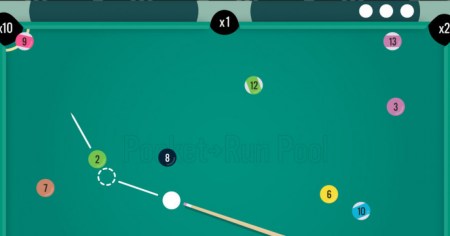
In der Community seinerzeit gefeiert, doch von Spieleentwicklern allem Anschein nach weitgehend unbemerkt, erfand Zach Gage für Pocket-Run Pool im Jahre 2018 einen ganz besonderen Spielmodus.
Im Rahmen unserer Kickstarter-Kampagne zur ersten Erweiterung für Crimson Company war ich vor einer Weile zu Gast im famosen Indie-Brettspiel-Podcast von Patrick Rauland. Unser Gespräch gibt es nun hier nachzuhören. Viel Spaß dabei!


 Posted by Fabian Fischer





 Ludokultur